
By Tracey Bell
I have been working in aesthetic medicine for many years, and if there is one topic that consistently comes up in consultations, it is hair loss in women. It doesn’t matter whether someone is in their twenties, thirties, forties, or beyond—thinning hair, increased shedding, widening parting lines, and reduced hair density are concerns that affect confidence on a very deep level.
Women often tell me the same thing in different ways: “I feel like my hair doesn’t look like mine anymore,” or “I don’t recognise my scalp when I look in the mirror.” It is rarely just about vanity. Hair is closely tied to identity, femininity, and self-esteem. When it changes, it can feel unsettling in a way that is difficult to explain.
Over the years, we have been asked constantly what actually works for hair loss in women. Patients want honesty. They are tired of miracle cures, confusing advice, and expensive treatments that don’t deliver meaningful results. They want something evidence-based, realistic, and sustainable.
This is exactly why we started to explore targeted scalp health treatments more seriously—and eventually discovered the Obagi Nu-Cil range, in particular the Biostim Scalp Serum.
Why Women Experience Hair Loss
Before talking about solutions, it is important to understand why hair loss happens in the first place. There is rarely a single cause. In women especially, it tends to be multifactorial.
Some of the most common triggers include:
- Hormonal changes (post-pregnancy, perimenopause, menopause)
- Genetic predisposition to female pattern hair thinning
- Stress and telogen effluvium
- Nutritional deficiencies such as iron, vitamin D, or protein deficiency
- Thyroid imbalance
- Certain medications
- Scalp inflammation or poor scalp health
What we see clinically is that the hair follicle becomes less efficient over time. Growth cycles shorten, hairs become finer, and more follicles enter the resting phase too early. The result is a gradual reduction in volume and density.
One of the biggest misconceptions patients have is that hair loss is always permanent or always dramatic. In reality, it often starts subtly. A slightly wider parting. Ponytails feeling thinner. Less fullness when styling. These early signs are often the best time to intervene.
What We Were Always Being Asked
In clinic, we were repeatedly being asked:
“What procedures help with hair loss?”
“Is there anything non-surgical that actually works?”
“Do scalp treatments really make a difference?”
We explored a range of approaches including nutritional support, medical referrals, PRP scalp treatments, and topical therapies. While some of these can be effective, especially in combination, many patients were looking for something simpler that they could incorporate into daily life without disruption.
That is where our interest in advanced topical scalp serums really began to grow.
We wanted something that was not just cosmetic conditioning, but something that actively supported the scalp environment and encouraged healthier hair growth conditions.
Discovering Obagi Nu-Cil Biostim Scalp Serum
It was through this ongoing search that we discovered the Obagi Nu-Cil Biostim Scalp Serum.
Obagi Medical has long been respected in the medical aesthetics world for creating clinically driven skincare systems. Their approach has always been rooted in science rather than trends, which immediately aligned with our philosophy in clinic.
The Nu-Cil Biostim Scalp Serum is designed specifically for scalp health and the appearance of fuller, thicker-looking hair over time. It is not positioned as an overnight solution, and that is one of the reasons we trusted it enough to introduce it to patients.
This is not about masking thinning hair. It is about improving the environment in which hair grows.
What the Serum Is and How It Works
The Obagi Nu-Cil Biostim Scalp Serum is a leave-on topical treatment applied directly to the scalp. It is designed to be used consistently over time as part of a daily routine.
From a clinical perspective, its formulation focuses on supporting three key areas:
1. Scalp Condition
Healthy hair begins with a healthy scalp. If the scalp is dry, inflamed, or imbalanced, hair follicles do not function optimally. The serum is designed to support scalp hydration and improve overall scalp condition.
2. Follicle Environment
The product works to optimise the environment around the hair follicle, encouraging conditions that support the natural growth cycle of hair.
3. Appearance of Density
With continued use, patients often report the appearance of fuller, thicker-looking hair. This is gradual and cumulative rather than immediate.
What is important to understand is that this is not a pharmaceutical hair growth drug. It does not claim to reverse all causes of hair loss. Instead, it is a supportive treatment that works best in early to moderate thinning and as part of a wider hair health plan.
How We Introduced It in Clinic
When we first began introducing the serum, we were cautious. In aesthetics, credibility matters, and we never recommend something unless we feel confident explaining how it works and what realistic outcomes look like.
We started by recommending it to patients with early signs of thinning or those experiencing seasonal shedding. We also used it as a maintenance option for patients who had undergone other scalp or hair restoration treatments.
What stood out quite quickly was consistency of feedback. Patients were not describing dramatic overnight changes, but rather gradual improvements in texture, manageability, and perceived density.
And in hair health, gradual improvement is often the most realistic and sustainable outcome.
When Do You Start to See Results?
One of the most common questions we get is: “How long before I notice a difference?”
The honest answer is that hair growth cycles take time.
Typically, with consistent use:
- 4–6 weeks: Some patients begin to notice reduced shedding and improved scalp comfort
- 8–12 weeks: Early signs of improved density and hair feel
- 3–6 months: More visible improvements in fullness and overall hair appearance
It is important to stress that results vary significantly depending on the cause of hair loss, age, hormonal status, and overall health.
This is not an instant transformation product. It requires patience and consistency, but that is also what makes it more sustainable.
The Importance of Consistency
If there is one thing I always emphasise to patients, it is consistency. Hair treatments fail most often not because the product is ineffective, but because they are not used regularly enough.
The scalp serum is designed to be simple:
- Apply daily
- Massage into the scalp
- Leave in (no rinsing required)
It becomes part of a routine, like skincare. And that is often how the best results are achieved.
The Photos You Will See Below Underneath
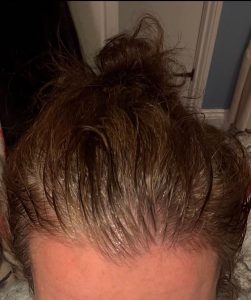
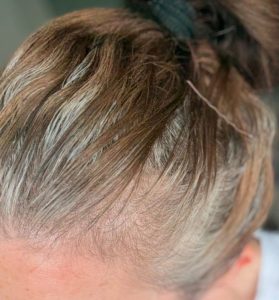
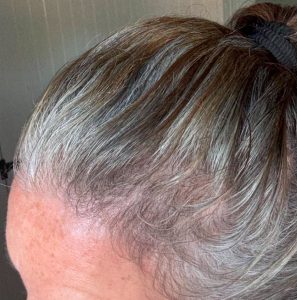
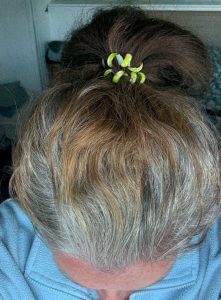
you will see photographs of one of our clients who has been using the Obagi Nu-Cil Biostim Scalp Serum consistently over a period of time. These images show a clear progression: Improved overall hair density Reduced visible scalp through the parting Healthier-looking shine and texture More volume at the root area What I find most important about these images is not just the visual improvement, but the confidence that returns with it. Clients often report feeling more comfortable wearing their hair up again, or no longer feeling the need to camouflage their parting. These are small but meaningful changes that can have a significant emotional impact.
How It Fits Into a Wider Hair Loss Strategy
In clinic, we rarely rely on one single treatment for hair loss. Instead, we take a layered approach.
Depending on the individual, this may include:
- Blood testing to identify deficiencies
- Hormonal assessment
- Nutritional support
- Scalp treatments
- Topical serums such as Obagi Nu-Cil
- Medical referral where necessary
The serum fits beautifully into this framework because it is low-maintenance, non-invasive, and easy to combine with other approaches.
Managing Expectations
One of the most important parts of treating hair loss is managing expectations honestly.
No topical serum can:
- Cure genetic hair loss permanently
- Reverse advanced follicle miniaturisation overnight
- Replace medical treatment where it is required
However, what we can say from experience is that supporting scalp health consistently can make a visible difference in many patients, particularly in early to moderate stages of thinning.
Final Thoughts
Hair loss in women is one of the most emotionally sensitive concerns we see in clinic. It is not just about appearance—it is about identity and confidence.
We are always careful about what we recommend, because patients are not looking for hype. They are looking for honesty and results that make sense.
The introduction of the Obagi Nu-Cil Biostim Scalp Serum has given us another valuable tool in supporting patients who are experiencing hair thinning. It is not a miracle cure, but it is a scientifically formulated, realistic option that fits into a broader approach to scalp and hair health.
And for many of our patients, that combination of consistency, realistic expectations, and supportive treatment is exactly what makes the difference.
Tracey Bell
Back to blog